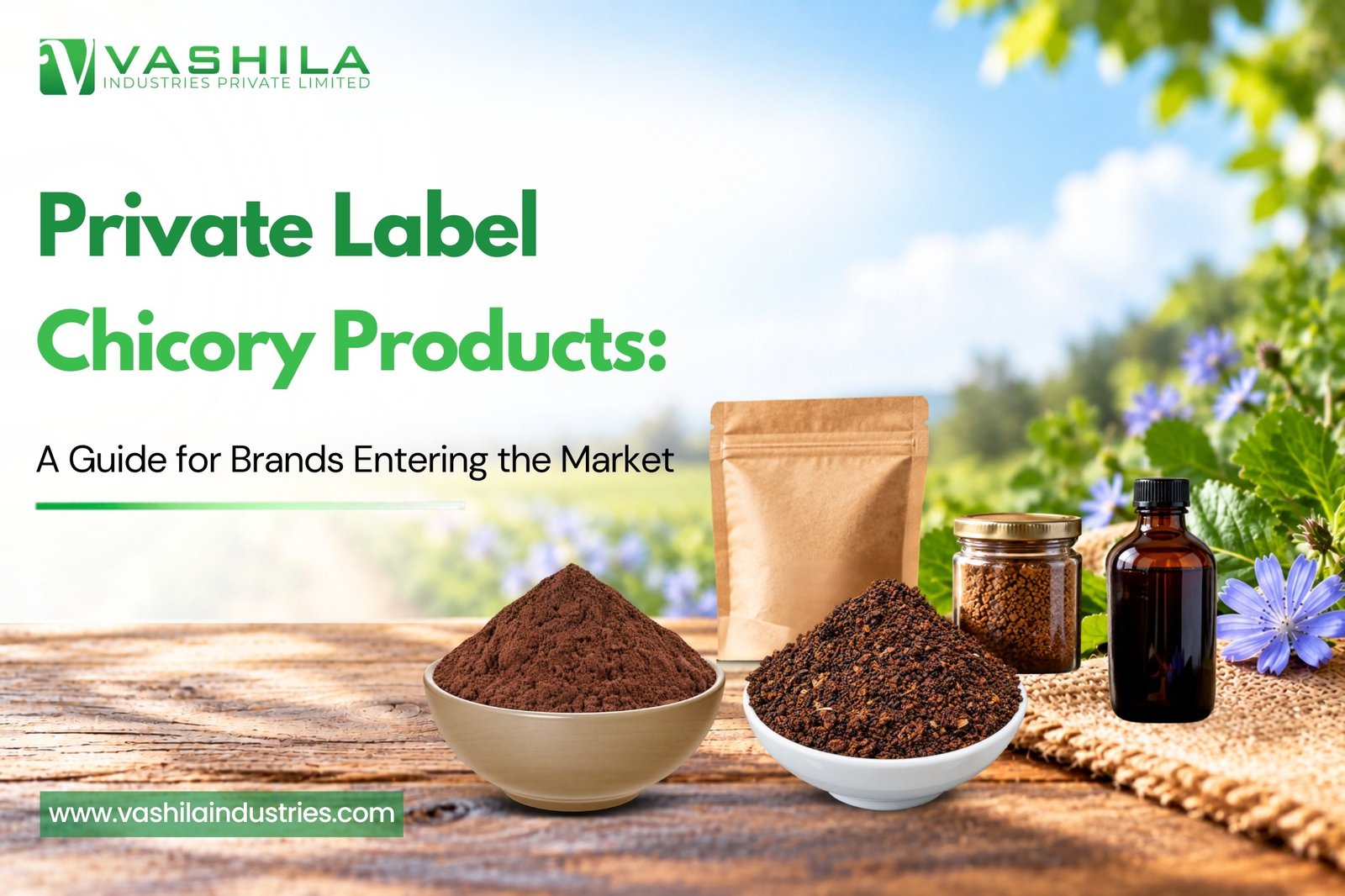
Say you want to sell your own chicory product. Maybe it’s a caffeine-free coffee alternative, an instant drink mix or a herbal blend with your name on the pack. You can build a factory, or you can have an experienced manufacturer make it and put your brand on the box. The second route is what people mean by private label.
It’s faster and far cheaper to start. It also has traps, especially around volumes, labels and imports. This guide walks through the decisions in the order you’ll meet them.
What private label actually means
Private label means a product made by one company and sold under another company’s brand. Supermarkets do it with their store brands, and so do independent brands that don’t own a plant.
The model has momentum, at least in the United States. According to the Private Label Manufacturers Association (PLMA), store brands reached 21.2% of dollar sales and 23.2% of unit sales in the first half of 2025, both described as record highs. Their dollar sales grew 4.4% against 1.1% for national brands [1]. A trade report on the same data projected about $277 billion in private-label sales for 2025, up from a record $271 billion in 2024, and put store-brand beverage dollar sales up 4.8% over the 52 weeks to mid-June 2025 [2].
A caution before you get excited. Those numbers cover US retail store brands across all categories. They say nothing about chicory specifically, and we haven’t found reliable chicory-only figures. Use them as a sign that buyers accept brands built this way, not as a forecast for your product.
Pick the chicory form before anything else
Your product idea decides the ingredient, so settle that first. Our pages list these uses:
- Instant chicory powder: instant drink premixes, instant coffee blends and other soluble beverages.
- Roasted chicory powder: soluble coffee blends, chicory-coffee mixtures and instant beverage formulations.
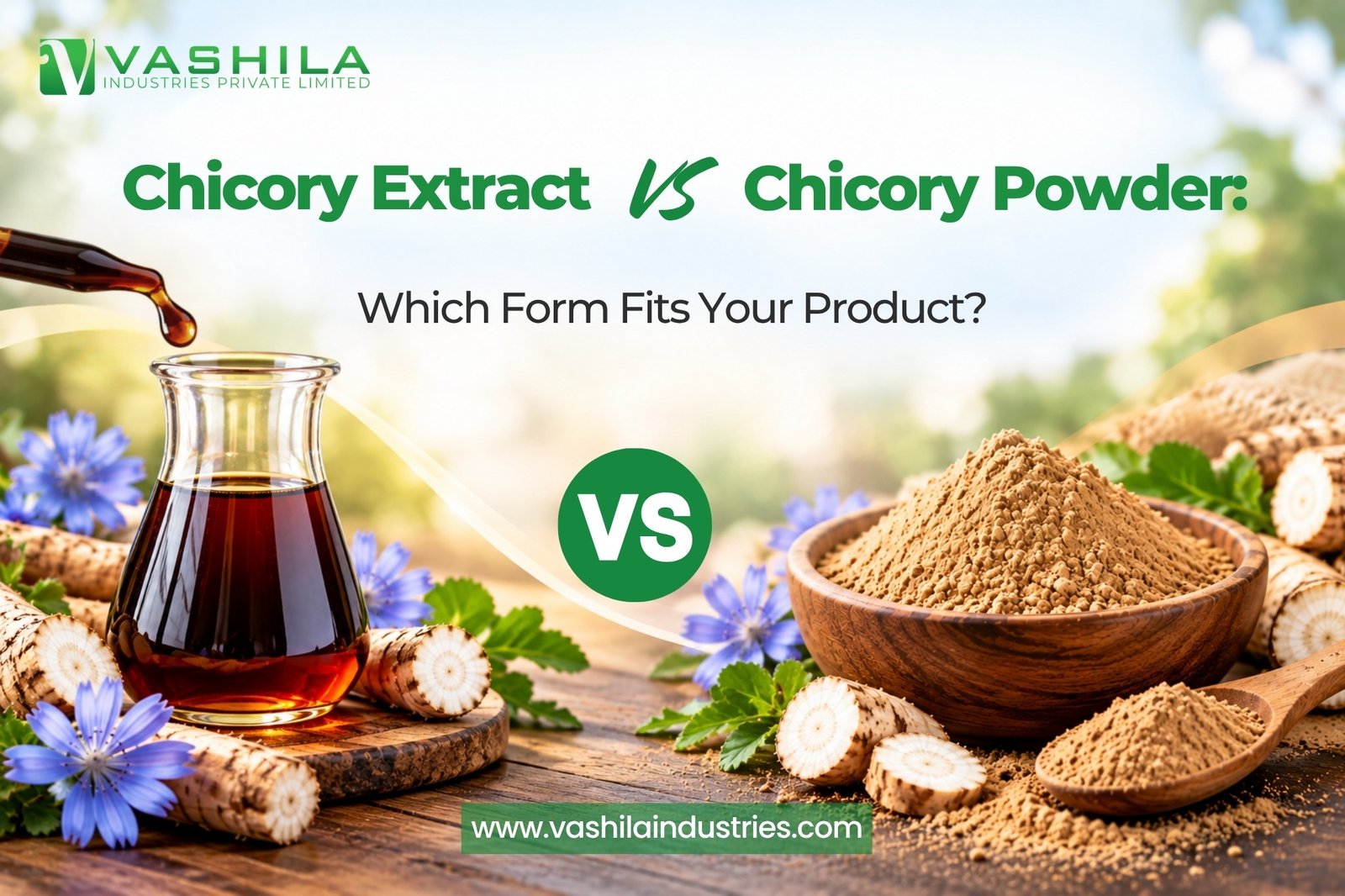
- Chicory extract: a liquid concentrate for beverages, bakery, confectionery, sauces and flavouring compounds.
- Roasted chicory granules, dried chicory roots and roasted chicory cubes for brands that want to start nearer the raw material.
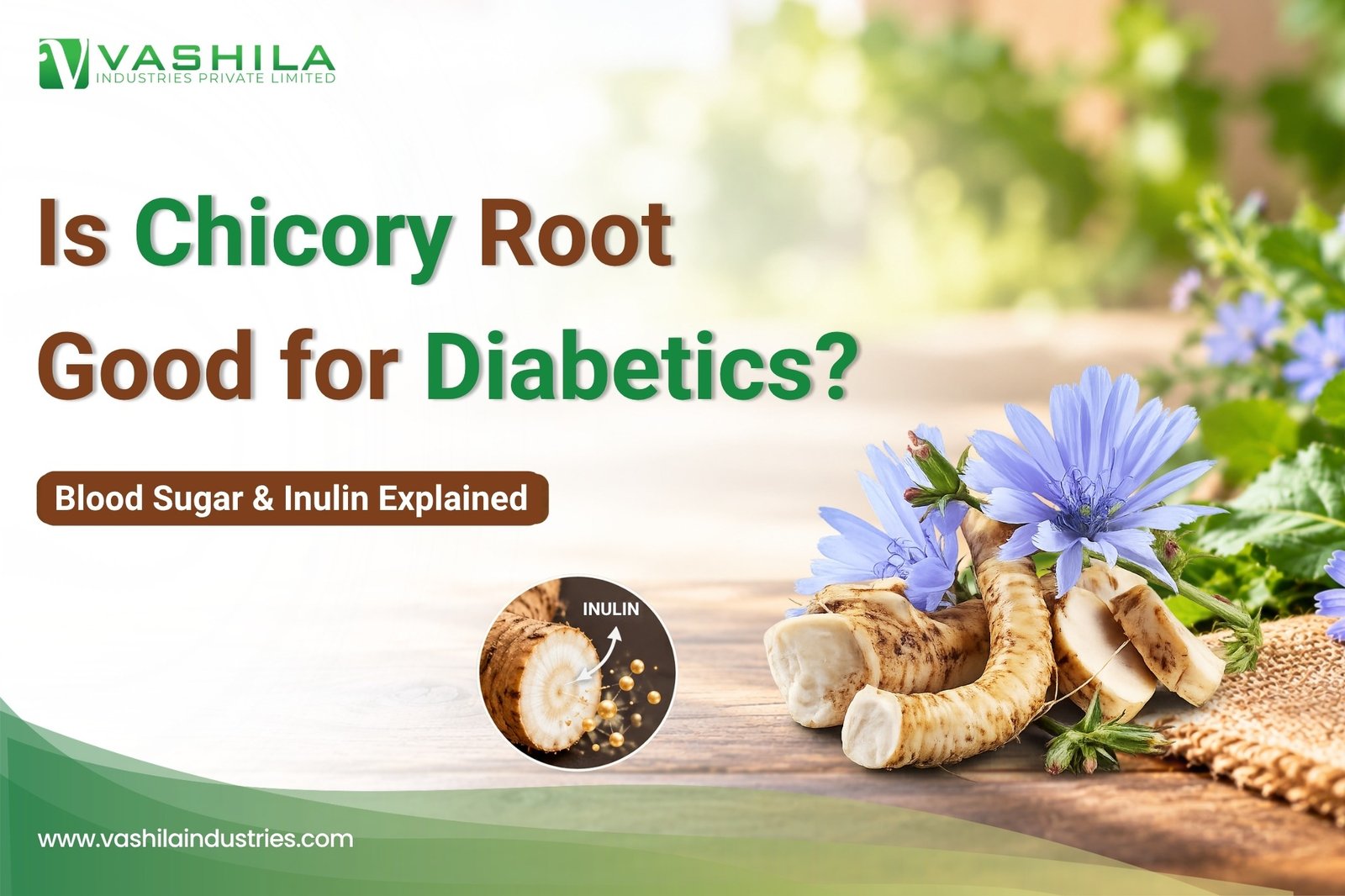
If you want a fiber or prebiotic story, remember that roasting changes chicory a lot, and unroasted chicory flour is a different starting point. Whatever you choose, ask for an assay of the lot rather than relying on a general claim.
What to look for in a manufacturing partner
Price matters, but these questions matter more.
Can they show their testing?
Our chicory page says every product is laboratory tested for purity, moisture content, extractability and sugar levels. Ask any supplier for the actual Certificate of Analysis for the batch you’ll receive, not a sample sheet from another lot.
What do the certificates cover?
Our site shows badges for HACCP, ISO food safety, Halal, Kosher and FSSAI, among others. A badge is a starting point. Ask for the certificate itself and read its scope and validity dates, because a certificate for one site or product doesn’t automatically cover another.
Who controls the raw material?
We do contract farming near Nadiad in Gujarat and work from a 35,000 sq ft processing and storage unit, so we can speak to where the root comes from. Whoever you pick, ask the same question.
Can they support export paperwork?
Our chicory page mentions export documentation support. Get the list of documents in writing before you order.
The volume question nobody wants to hear
Here’s the part that surprises new brands. Our listed minimum for the powders is 13 MT per container, and one 20 FT container (roughly 13 MT) for export extract orders. For scale, 13 MT is 13,000 kg, which would fill 130,000 packs of 100 g. That’s a lot of tea-sized pouches for a first launch.
So plan around it. Request samples first, test them in your own recipe, and decide on your pack size and first-year volume before you talk numbers. When you contact us, tell us your expected volume early so we can say what’s realistic. We offer a free chicory sample; the form lets you pick a product and describe your purchasing requirements.
Packaging and labels
Our chicory page lists customised packaging and bulk supply capabilities, so branded packaging is something to discuss with us. Two practical points apply whichever supplier you use.
First, protect the powder. Soluble powders hate humidity. A 2025 study in Foods stored instant coffee out of its pack at 20 °C. It stayed stable at 11% relative humidity, but at 65% critical moisture levels were exceeded within a week, and within three months the powder looked degraded, dissolved poorly and brewed worse [8]. That was coffee, not chicory, so treat it as an analogy, but it’s a good reason to choose moisture-barrier packaging and to test how your pack holds up.
Second, mind the label. In the US, a packaged food label must conspicuously show the name and place of business of the manufacturer, packer or distributor. If that company didn’t make the food, the name has to be qualified with a phrase such as “Manufactured for” or “Distributed by” [4]. That’s the rule that decides where your brand’s name goes on a private label pack. FDA’s own labeling guide dates from 2013, and it says its allergen and nutrition chapters are under revision, pointing readers to newer guidance [5]. Have a regulatory specialist review your final label before it goes to print.
Importing: who does what
Rules differ by country. We export to markets including Russia, the Gulf countries and North America, so check the rules for yours. The US is a useful example, because it shows how much falls on the brand.
- Foreign Supplier Verification Program (FSVP). The importer is the US owner or consignee of the food. A separate FSVP is needed for each food and each foreign supplier. Importers evaluate hazards, approve suppliers, verify them and re-evaluate at least every three years. Modified requirements apply to very small importers, with a $1 million annual sales threshold for human food [3].
- Facility registration. FSMA requires facilities that manufacture, process, pack or hold food for US consumption to register, and registrations are renewed every other year [6].
- Prior notice. FDA requires advance notice of imported food shipments [7].
- Tariff code. Roasted chicory and its extracts fall under HS subheading 2101.30 [9]. Your customs broker will confirm the exact code for your market.
If you’re the brand and also the importer, these duties are yours. If you use an importer, agree in writing who handles what.
A realistic path from idea to shelf
- Define the product and the customer, including pack size and price.
- Request samples of two or three forms.
- Test them in your own recipe and with a few real drinkers.
- Agree specifications and the Certificate of Analysis you’ll receive.
- Design packaging and the label, then get the label reviewed.
- Line up your importer, customs broker and paperwork.
- Plan the first order around the minimum volume.
Mistakes worth avoiding
Ordering before testing is the big one. Close behind are skipping the label review, assuming a certificate covers more than it does, ignoring humidity in storage and underestimating the volume you’ll need to buy. None of these is hard to fix early. All of them are expensive late.
Common questions
Can I put my own brand on chicory powder?
Our chicory page lists customised packaging and bulk supply. Tell us what you need, including labelling, and we’ll tell you what’s possible.
What’s the minimum order?
We list 13 MT per container for the powders, and one 20 FT container (roughly 13 MT) for export extract orders.
Can I get a sample first?
Yes. Use the free sample form and share your purchasing requirements.
Do I need a US importer?
For food coming into the US, the importer is the US owner or consignee, and FSVP duties sit with that importer [3]. Speak with a customs broker or regulatory consultant about your setup.
Where to start
Browse the full chicory range, send us your plan through the contact page, or read more on our blog.
This article is general information, not legal or regulatory advice. Check current rules for your market with a qualified professional.
References
- Perishable News. PLMA: First-half 2025 private label report: sales rise 4.4% in all retail outlets. July 30, 2025. https://perishablenews.com/?p=416327
- Supermarket News. Private-label sales projected to reach $277B in 2025. July 22, 2025. https://www.supermarketnews.com/private-label/private-label-sales-projected-to-reach-277b-in-2025
- US Food and Drug Administration. FSMA final rule on Foreign Supplier Verification Programs (FSVP) for importers of food for humans and animals. https://www.fda.gov/food/food-safety-modernization-act-fsma/fsma-final-rule-foreign-supplier-verification-programs-fsvp-importers-food-humans-and-animals
- 21 CFR § 101.5. Food; name and place of business of manufacturer, packer, or distributor. https://www.law.cornell.edu/cfr/text/21/101.5
- US Food and Drug Administration. Guidance for industry: a food labeling guide. https://www.fda.gov/regulatory-information/search-fda-guidance-documents/guidance-industry-food-labeling-guide
- US Food and Drug Administration. Registration of food facilities and other submissions. https://www.fda.gov/food/guidance-regulation-food-and-dietary-supplements/registration-food-facilities-and-other-submissions
- US Food and Drug Administration. Prior notice of imported foods. https://www.fda.gov/food/importing-food-products-united-states/prior-notice-imported-foods
- Lopriore M, Alongi M, Valentino M, Anese M, Nicoli MC. Impact of environmental humidity on instant coffee stability: defining moisture thresholds for quality degradation and shelf life prediction. Foods. 2025;14(10):1826. https://doi.org/10.3390/foods14101826
- HS code 2101.30, roasted chicory and other roasted coffee substitutes, and extracts, essences and concentrates thereof (2024 edition). https://www.tariffnumber.com/2024/210130