Onions are one of the most widely used ingredients in global cuisine. However, fresh onions are not always practical for food processing, long-term storage, or large-scale cooking operations. This is why dehydrated onion products such as onion powder and onion flakes are widely used across the food industry.
While both forms are made from dehydrated onions, they serve different purposes depending on flavor intensity, texture, and application. Understanding the difference between onion powder and onion flakes helps chefs, food manufacturers, and food service professionals choose the right ingredient for their recipes.
This guide explains how onion powder and onion flakes differ, how they are produced, and when each form is most useful in cooking and food manufacturing.
What Is the Difference Between Onion Powder and Onion Flakes?
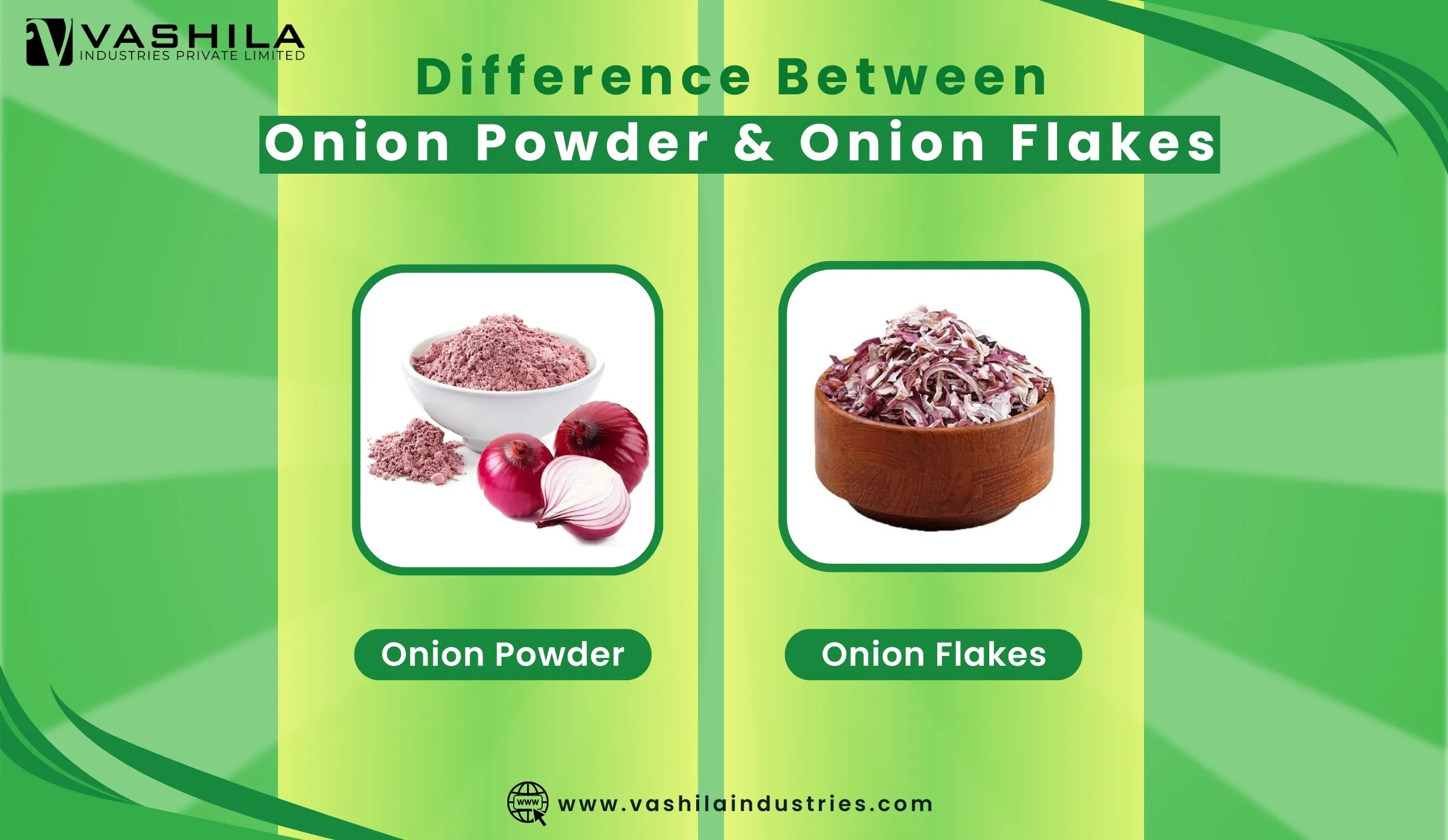
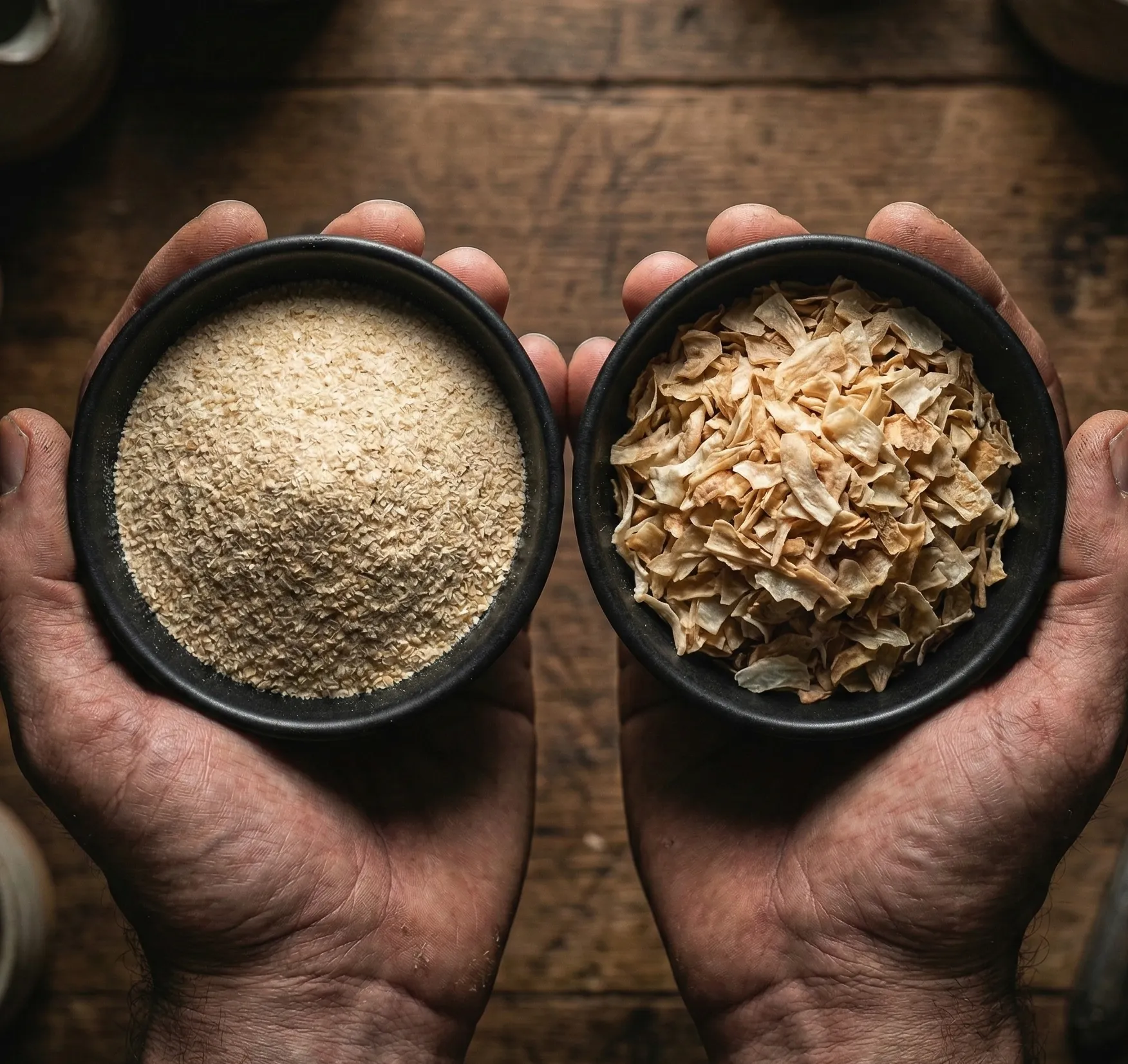
The main difference between onion powder and onion flakes is texture and flavor concentration.
Onion powder is finely ground dehydrated onion with a strong, concentrated flavor that blends easily into sauces, spice mixes, and marinades.
Onion flakes are small dried pieces of onion that rehydrate during cooking and add texture to dishes such as soups, noodle mixes, and ready meals.
In simple terms, onion powder delivers flavor, while onion flakes deliver flavor plus texture.
When Should You Use Onion Powder Instead of Onion Flakes?
Onion powder is best used when a recipe requires a smooth texture and evenly distributed onion flavor.
It is commonly used in:
- spice blends
- seasoning powders
- snack flavoring
- sauces and dressings
- marinades and dry rubs
Because onion powder dissolves easily, it works well in processed foods and ready-to-eat products.
When Are Onion Flakes Better Than Onion Powder?
Onion flakes are ideal when recipes require visible onion pieces or mild onion texture.
They are frequently used in:
- soups and stews
- instant noodles
- ready meal kits
- dry seasoning mixes
- salad toppings
During cooking, onion flakes absorb moisture and regain a soft onion texture.
Are Onion Powder and Onion Flakes Made From the Same Ingredient?
Yes. Both onion powder and onion flakes are made from dehydrated onions.
Fresh onions are cleaned, sliced, and dried using controlled dehydration methods. The quality of dehydrated onion products depends heavily on the science behind the dehydrating food process, which removes moisture while preserving flavor and nutrients. The dried onions are then processed into different formats:
- flakes
- granules
- minced onion
- powder
The difference between these products comes from how the dehydrated onions are cut or ground during processing.
What Is Onion Powder?
Onion powder is a finely ground product made from dehydrated onions. Fresh onions are cleaned, sliced, and dried using industrial dehydration methods before being ground into a smooth powder.
The resulting powder has a strong and concentrated onion flavor, making it a popular seasoning ingredient in many food products.
Characteristics of Onion Powder
- Fine powder texture
• Strong, concentrated flavor
• Dissolves easily in liquids
• Even flavor distribution
Because of its smooth texture, onion powder blends easily into spice mixes, sauces, and processed foods.
Common Uses of Onion Powder
Onion powder is widely used in:
- Seasoning blends
- Snack flavoring
- Instant soups
- Sauces and dressings
- Marinades
- Ready-to-eat meals
In large-scale food production, onion powder is preferred because it distributes flavor evenly without affecting texture.
What Are Onion Flakes?
Onion flakes are dehydrated onions that are cut into small flat pieces and dried. Unlike onion powder, flakes retain a visible structure and provide a mild onion texture when rehydrated.
These flakes are commonly used where visible onion pieces or texture are desired.
Characteristics of Onion Flakes
Small dried onion pieces
Mild, natural onion flavor
Rehydrate when cooked
Add texture to dishes
Onion flakes are often used in recipes where the appearance of onion pieces is important.
Common Uses of Onion Flakes
Onion flakes are commonly used in:
- Soups and stews
- Ready meal kits
- Instant noodles
- Spice blends
- Dry food mixes
- Salad toppings
They are also popular in the snack and convenience food industry, where small onion pieces provide both flavor and texture.
Onion Powder vs Onion Flakes: Key Differences
Although both products originate from dehydrated onions, they differ significantly in texture, flavor strength, and usage.
| Feature | Onion Powder | Onion Flakes |
|---|---|---|
| Texture | Fine powder | Small dried pieces |
| Flavor Intensity | Strong and concentrated | Mild and natural |
| Appearance | Invisible in recipes | Visible onion pieces |
| Usage | Seasonings and sauces | Soups, mixes, toppings |
| Rehydration | Dissolves instantly | Rehydrates during cooking |
In simple terms, onion powder delivers strong flavor, while onion flakes add both flavor and texture.
When to Use Onion Powder
Onion powder is ideal for recipes where you want onion flavor without visible onion pieces.
It is particularly useful in:
- Spice blends
• Snack seasonings
• Marinades
• Sauces
• Dry rubs
Food manufacturers often prefer onion powder because it ensures uniform flavor distribution in processed foods.
For example, potato chips, seasoning powders, and ready-to-eat snacks frequently use onion powder to create consistent flavor profiles.
When to Use Onion Flakes
Onion flakes are better suited for recipes where texture and visual appearance are important.
They are commonly used in:
- Instant soups
• Noodle seasoning packs
• Pasta sauces
• Ready meal mixes
• Salad toppings
During cooking, onion flakes absorb moisture and rehydrate, giving dishes a more natural onion texture.
How Onion Powder and Onion Flakes Are Made
Both products are produced using similar dehydration processes.
The typical manufacturing process includes:
- Cleaning and sorting fresh onions
- Peeling and slicing
- Dehydration through controlled drying
- Cutting or grinding depending on final product
For onion flakes, dehydrated onions are cut into small pieces. For onion powder, the dried onions are further ground into a fine powder.
To understand the detailed process used in the food industry, you can explore the dehydrated onion manufacturing process.
To understand how onion flakes and onion powder are produced at an industrial scale, explore the detailed dehydrated onion manufacturing process used in modern food processing.
Why the Food Industry Uses Dehydrated Onion Products
Dehydrated onions are widely used because they offer several advantages compared to fresh onions.
- Longer Shelf Life
Dehydrated onions can be stored for long periods without refrigeration. - Easy Storage and Transportation
They are lighter and require less storage space than fresh onions. - Consistent Flavor
Industrial dehydration ensures consistent taste and quality. - Convenience in Food Processing
Manufacturers can easily incorporate dehydrated onion products into seasoning blends, snacks, sauces, and ready meals.
Similar dehydration techniques are also used to produce different dried garlic varieties used in FMCG products, which are widely used in seasoning blends and ready meals.
These advantages make dehydrated onions essential ingredients in modern food manufacturing and FMCG products.
Choosing the Right Onion Format for Your Application
Selecting between onion powder and onion flakes depends on your product requirements.
Choose onion powder if:
- You need strong flavor concentration
• Texture must remain smooth
• The ingredient must blend evenly
Choose onion flakes if:
- Visible onion pieces are required
• Texture enhancement is desired
• Rehydration during cooking is acceptable
Many food manufacturers use both formats depending on the recipe.
Role of Dehydrated Onion in the Global Food Industry
Dehydrated onion products are widely used in global food supply chains.
Major industries that rely on dehydrated onions include:
- Snack manufacturers
- Instant noodle producers
- Frozen food companies
- Spice blend manufacturers
- Ready meal producers
Because of their versatility, dehydrated onion ingredients are considered essential components in many processed foods.
The demand for dehydrated onion ingredients continues to grow alongside the global market for dehydrated fruits and vegetables used in food exports.
Conclusion
Both onion powder and onion flakes offer unique benefits depending on how they are used in cooking or food manufacturing.
Onion powder provides strong, concentrated flavor and smooth blending, making it ideal for seasoning mixes and sauces. Onion flakes provide natural onion texture and appearance, making them suitable for soups, meal kits, and spice blends.
Understanding these differences helps chefs, food manufacturers, and food service professionals choose the right ingredient for their applications.
As the demand for convenient food ingredients continues to grow, dehydrated onion products will remain a vital component in modern food processing.
FAQ Section
What is the main difference between onion powder and onion flakes?
The main difference is texture. Onion powder is finely ground and dissolves easily, while onion flakes are small dried onion pieces that rehydrate during cooking.
Can onion powder replace onion flakes?
Yes, but the flavor may be stronger and the texture will be different. Onion powder provides flavor but does not add visible onion pieces.
Are onion flakes the same as dried onion?
Yes. Onion flakes are a common form of dried or dehydrated onion used in cooking and food manufacturing.
Which is stronger: onion powder or onion flakes?
Onion powder is more concentrated and typically has a stronger flavor than onion flakes.
Why are dehydrated onions used in the food industry?
Dehydrated onions are widely used because they have a longer shelf life, are easier to store and transport, and provide consistent flavor in processed foods.