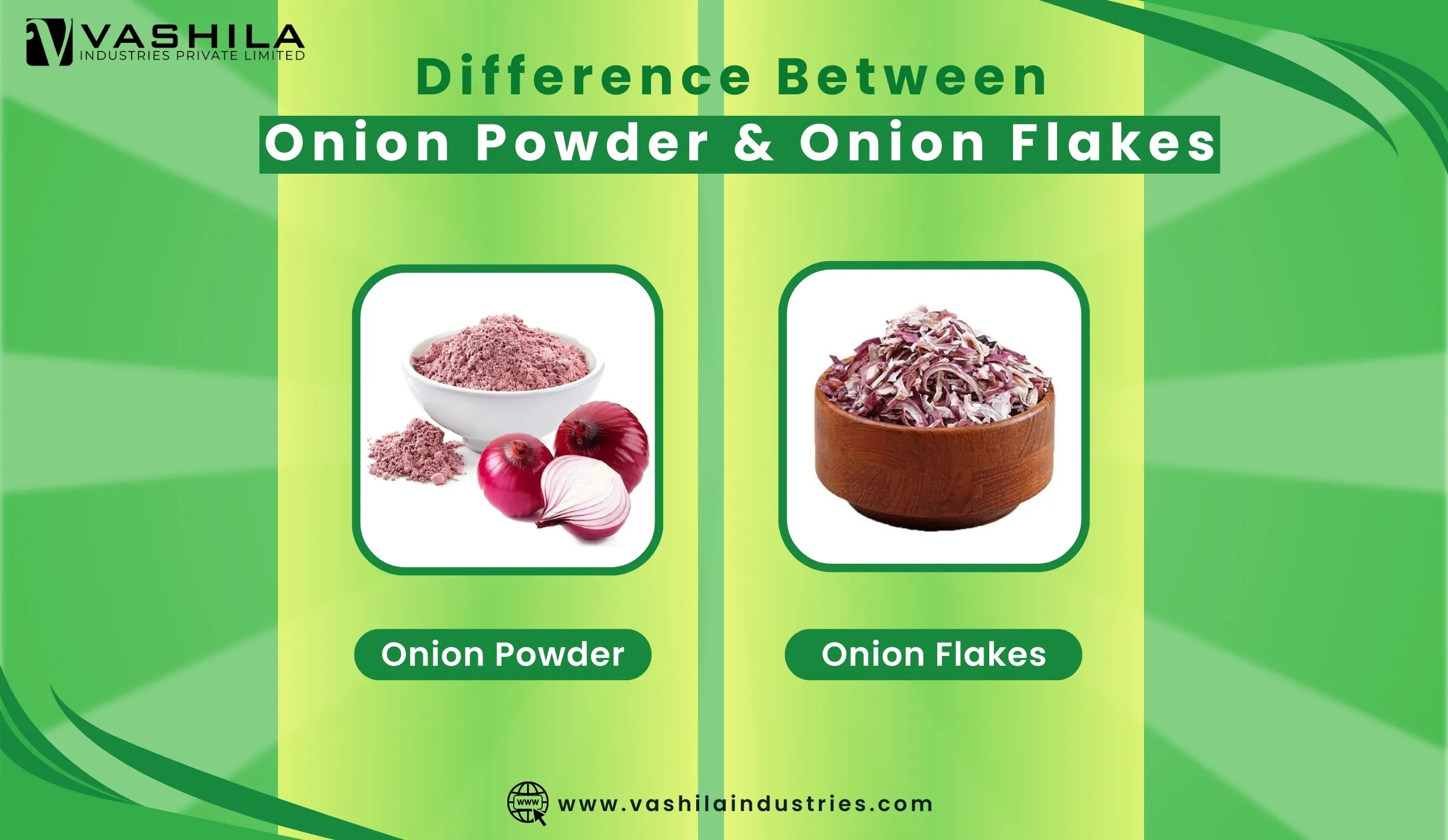
Onion powder is a staple ingredient in kitchens and food manufacturing because of its strong flavour and convenience. But what if you run out of it or need a replacement for a specific recipe?
The good news is that there are several onion powder substitutes you can use depending on your cooking needs, flavour preference, and availability.
This guide covers the best alternatives to onion powder, how to use them correctly, and the exact conversion ratios to maintain the right flavour in your recipes.
What Is Onion Powder?
Onion powder is made from dehydrated onions that are finely ground into a smooth powder. It delivers concentrated onion flavor without adding texture, making it ideal for seasoning blends, sauces, and processed foods.
To understand how it is produced, you can explore the dehydrated onion manufacturing process used in the food industry.
What Is the Best Onion Powder Substitute?
The best onion powder substitute is onion flakes or onion granules, as they are made from the same dehydrated onions and provide a similar flavor.
- 1 tablespoon onion flakes = 1 teaspoon onion powder
- 2 teaspoons onion granules = 1 teaspoon onion powder
For fresh cooking, chopped onion can also be used, but it adds moisture and texture.
Onion Flakes (Best Direct Substitute)
Onion flakes are one of the closest substitutes for onion powder because they are also made from dehydrated onions.
How to Use:
Use 1 tablespoon of onion flakes in place of 1 teaspoon of onion powder.
Why It Works:
- Same ingredient source
- Mild and natural flavor
- Rehydrates during cooking
Onion flakes are widely used in soups, ready meals, and spice blends where texture is acceptable.
Onion Granules
Onion granules are slightly coarser than powder but finer than flakes.
How to Use:
Use 2 teaspoons of onion granules for 1 teaspoon of onion powder.
Why It Works:
- Strong flavor
- Easy to mix
- Less fine than powder
They are commonly used in seasoning mixes and processed foods.
Fresh Onion
Fresh onions are a natural substitute, although they add moisture and texture.
How to Use:
Use ½ cup finely chopped onion for 1 teaspoon onion powder.
Why It Works:
- Real onion flavor
- Easily available
- Works well in cooked dishes
However, fresh onions may not be suitable for dry mixes or spice blends.
Garlic Powder
Garlic powder can be used when onion flavor is not essential but a similar savory depth is needed.
How to Use:
Use ½ teaspoon garlic powder for 1 teaspoon onion powder.
Why It Works:
- Adds umami flavor
- Works well in seasoning blends
It is commonly used in snacks and spice mixes.
Shallots
Shallots provide a milder and slightly sweet onion flavor.
How to Use:
Use ½ cup chopped shallots for 1 teaspoon onion powder.
Why It Works:
- Balanced flavor
- Suitable for sauces and cooking
Leeks
Leeks are another mild onion substitute often used in soups and European dishes.
How to Use:
Use ½ cup chopped leeks for 1 teaspoon onion powder.
Onion Paste
Onion paste can be used in cooking where moisture is acceptable.
How to Use:
Use 1–2 tablespoons onion paste depending on flavor requirement.
Chives
Chives offer a mild onion-like flavor and are best used as a finishing ingredient.
How to Use:
Use fresh chopped chives as needed.
Quick Conversion Table
Onion Powder | Substitute |
1 tsp | 1 tbsp onion flakes |
1 tsp | 2 tsp onion granules |
1 tsp | ½ cup chopped onion |
1 tsp | ½ tsp garlic powder |
Which Substitute Is Best for You?
Choose based on your requirement:
For Cooking:
- Fresh onion, shallots, or leeks
For Dry Recipes:
- Onion flakes or granules
For Seasoning Blends:
- Onion powder alternatives like granules or garlic powder
Why Dehydrated Onion Products Are the Best Substitute
In commercial food production, dehydrated onion products such as flakes, granules, and powder are preferred because they offer:
- long shelf life
- consistent flavor
- easy storage
- low moisture content
- better process control
The quality of these products depends on the food dehydration process used in modern manufacturing, which ensures flavor retention and product stability.
Role of Onion Powder Substitutes in Food Industry
Food manufacturers often use different onion formats depending on product requirements.
For example:
- Snacks → onion powder
- Ready meals → onion flakes
- Spice blends → granules
Similar to onions, different dried garlic varieties used in FMCG products are also used in seasoning and processed food applications.
Conclusion
Running out of onion powder doesn’t mean compromising on flavor. There are multiple substitutes available, from onion flakes and granules to fresh onions and garlic powder.
The right choice depends on your recipe, texture requirements, and flavor intensity.
For cooking and industrial applications, dehydrated onion products remain the most reliable and versatile option due to their consistency, shelf life, and ease of use.
FAQ Section
What is the best substitute for onion powder?
The best substitute for onion powder is onion flakes or onion granules because they are made from the same ingredient and provide similar flavor
Can I use fresh onion instead of onion powder?
Yes, fresh onion can be used, but it adds moisture and texture. It is best suited for cooked dishes rather than dry recipes.
How much onion flakes equal onion powder?
1 tablespoon of onion flakes is equal to approximately 1 teaspoon of onion powder.
Is garlic powder a good substitute for onion powder?
Garlic powder can be used, but it provides a different flavor. It works best in seasoning blends where onion flavor is not essential.
Why do food manufacturers prefer dehydrated onion products?
Dehydrated onion products are preferred because they offer longer shelf life, consistent flavor, and better storage compared to fresh onions.