The global chicory market in FY 2025–2026 reflects a year of structural stability, moderate expansion, and strategic repositioning across food and beverage applications. While previous years emphasized recovery and expansion, this financial year has been characterized by supply normalization, formulation diversification, and stronger export discipline.
This report reviews what shaped the chicory industry during FY 2025–2026 and examines what these developments indicate for 2026 and beyond.
Part I: What Shaped the Chicory Market in FY 2025–2026
1. Steady Demand Growth Across Food & Beverage
During FY 2025–2026, food and beverage continued to dominate chicory consumption. Coffee blending remained relevant, but demand expanded more noticeably in:
- Ready-to-drink beverage formulations
- Fiber-enriched bakery products
- Plant-based beverage alternatives
- Private-label consumer blends
Rather than explosive growth, the year reflected stable and predictable expansion. Buyers prioritized consistency and long-term supply reliability over speculative volume increases.
2. Diversification Beyond Coffee Blending
Historically, chicory demand has been closely linked to coffee markets. In FY 2025–2026, the industry saw stronger diversification into:
- Functional nutrition formulations
- Sugar-reduction reformulations
- Clean-label ingredient applications
- Digestive wellness products
This diversification reduced dependency on coffee price fluctuations and positioned chicory as a broader formulation ingredient rather than a substitute component.
3. Regional Supply Stability
Europe and Asia-Pacific remained central production ecosystems throughout FY 2025–2026.
Key observations:
- Europe maintained stable cultivation and structured processing systems.
- Asia-Pacific, particularly India, continued expanding export-oriented processing capabilities.
- North America relied on imports but showed growing demand for caffeine-free beverage alternatives.
Global supply chains experienced fewer disruptions compared to previous volatile periods, improving buyer confidence.
Check This Blog: Export grade chicory standards
4. Operational & Agricultural Considerations
Despite stability, operational realities remained important.
The year highlighted:
- Seasonal agricultural variability
- Moisture control management requirements
- Processing standardization challenges
- Increasing buyer scrutiny on traceability
Export buyers increasingly requested:
- Batch-level documentation
- Standardized granulation profiles
- Controlled roasting consistency
- Quality certifications
Processing discipline became a stronger differentiator than simple production capacity.
5. Pricing Environment
Compared to volatile commodity markets such as coffee, chicory pricing remained relatively stable during FY 2025–2026.
This stability made chicory attractive for:
- Blend optimization
- Cost-controlled formulations
- Private-label beverage production
Mid-sized processors with efficient production systems remained competitive in international markets.
6. Investment & Technology Movement
FY 2025–2026 also saw gradual investment in:
- Drying technology upgrades
- Extraction efficiency improvements
- Clean-label compliance systems
- Traceability infrastructure
Rather than aggressive expansion, the focus remained on operational refinement and quality optimization.
Also read,

Part II: What FY 2025–2026 Signals for 2026 and Beyond
1. Chicory as a Structural Ingredient, Not a Trend
The most important signal from FY 2025–2026 is that chicory has transitioned from a niche alternative to a structural formulation ingredient.
Going forward, growth will likely be supported by:
- Clean-label product innovation
- Reduced caffeine beverage development
- Fiber-enrichment in functional foods
- Private-label expansion across emerging markets
The demand profile appears sustainable rather than speculative.
2. Expansion in Caffeine-Reduction Applications
As consumers increasingly moderate caffeine intake, chicory remains strategically positioned as a complementary ingredient.
The coming years may see:
- More beverage blends incorporating chicory
- Increased visibility in retail labeling
- Innovation in flavor-balanced caffeine-reduced products
This trend supports long-term demand stability.
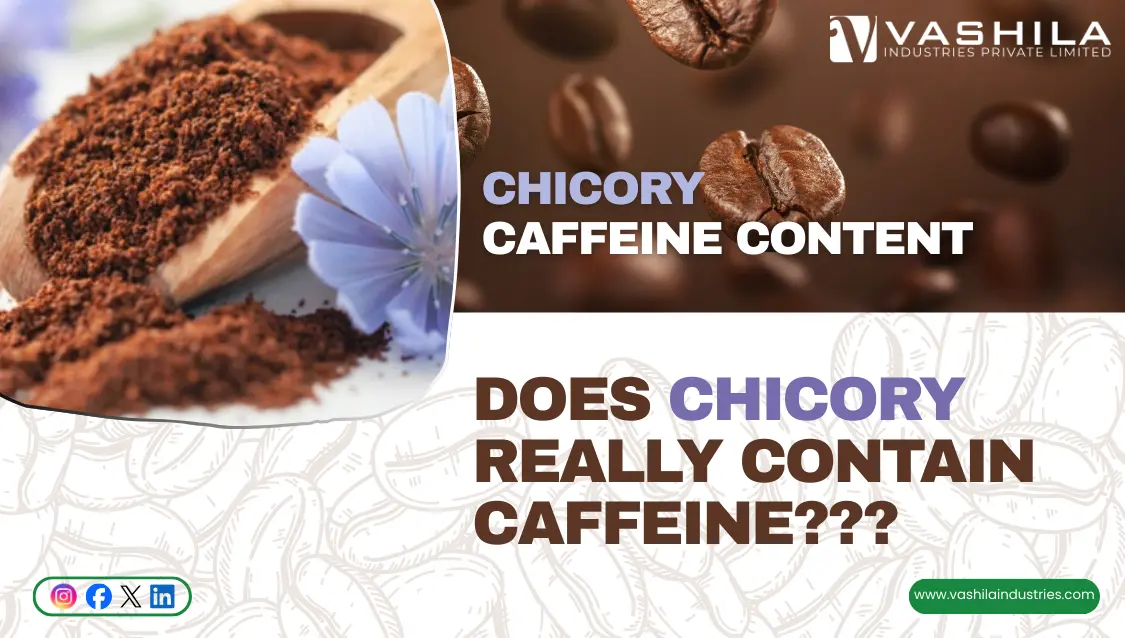
Read this Article: Chicory Caffeine Content
3. Stronger Role of Asia-Pacific in Global Supply
Asia-Pacific is expected to strengthen its role as:
- A scalable processing hub
- A competitive export base
- A quality-standardized supply ecosystem
Investment in processing infrastructure during FY 2025–2026 sets the foundation for continued export expansion.
4. Focus on Processing Standardization
Future growth will increasingly depend on:
- Consistent roasting profiles
- Moisture-controlled storage
- Particle size uniformity
- Documentation and regulatory alignment
Buyers will prioritize suppliers capable of maintaining technical consistency rather than simply offering volume.
5. Moderate but Sustainable Growth Outlook
Industry indicators suggest:
- Continued mid-single-digit growth
- Stable export activity
- Controlled pricing environment
- Gradual expansion into diversified applications
No signs indicate rapid volatility; instead, the chicory market appears to be entering a maturity phase with steady structural growth.
Strategic Implications for Industry Stakeholders
For beverage manufacturers, FMCG brands, and ingredient distributors, the FY 2025–2026 review highlights several priorities:
- Secure long-term supplier relationships
- Evaluate processing consistency over price alone
- Monitor regional cultivation trends
- Align product innovation with clean-label positioning
For processors, differentiation will depend on:
- Export compliance readiness
- Technical processing capabilities
- Quality control systems
- Flexible product format offerings
Conclusion
FY 2025–2026 was not a year of dramatic upheaval for the chicory industry. Instead, it marked consolidation, stabilization, and gradual expansion into diversified application areas.
The market now reflects maturity rather than volatility. With steady demand drivers, improving processing systems, and expanding application diversity, the outlook for 2026 and beyond remains stable and strategically promising.
Chicory’s role in global food and beverage ecosystems continues to evolve from alternative ingredient to functional formulation component — a shift that is likely to define the next phase of industry growth.
You can also read our complete chicory guide
Frequently Asked Questions
What defined the chicory market in FY 2025–2026?
The year was characterized by stable demand growth, diversified applications beyond coffee blending, and improved export discipline.
Did chicory demand increase in 2025–2026?
Yes, demand continued steady mid-single-digit growth across food, beverage, and supplement segments.
Which regions led production in FY 2025–2026?
Europe and Asia-Pacific remained key production and export regions.
Was pricing volatile during this financial year?
Compared to other commodity markets, chicory pricing remained relatively stable.
What is the outlook for chicory in 2026?
The outlook suggests moderate but sustainable growth driven by clean-label reformulation, caffeine-reduction trends, and diversified applications.