Chicory and coffee share a similar roasted character, but they serve different functional and commercial purposes in beverage formulations. While coffee remains the primary ingredient in most blends, chicory has become a strategic addition for manufacturers seeking caffeine reduction, flavor balance, and cost stability.
This guide explains the practical differences between chicory and coffee, their respective benefits, and why many global brands combine the two.
What Is the Difference Between Chicory and Coffee?
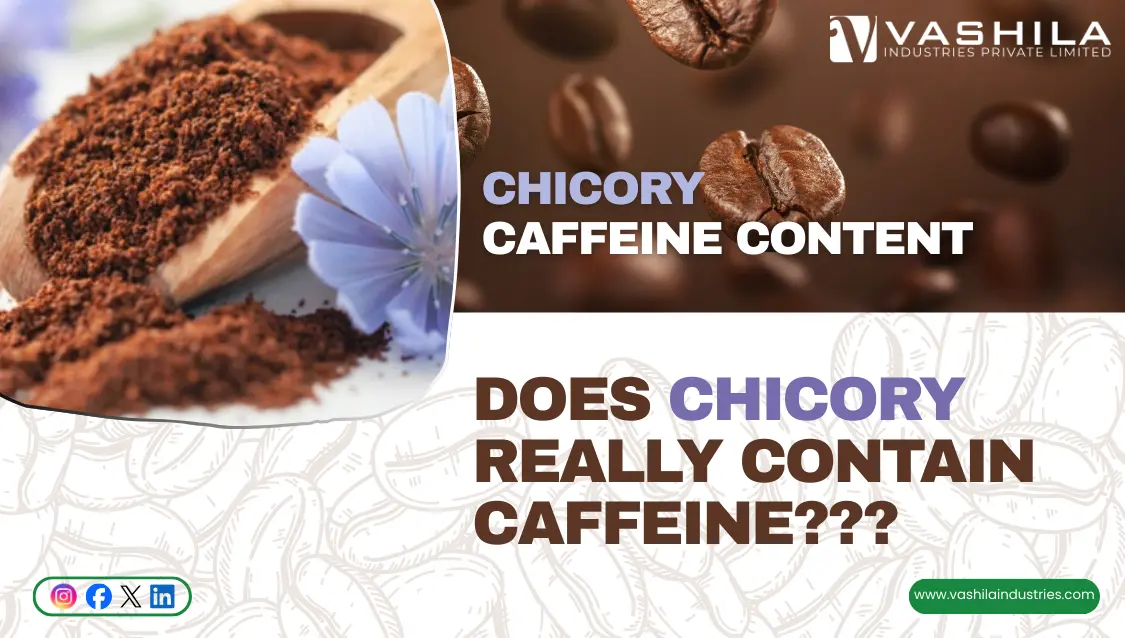
Coffee is derived from roasted coffee beans and naturally contains caffeine. Chicory, on the other hand, is produced by roasting dried chicory roots and is completely caffeine-free.
Despite different origins, roasted chicory delivers a similar bitterness, color, and aroma, which allows it to complement or partially replace coffee in various applications.
Chicory vs Coffee – A Functional Comparison
| Parameter | Chicory | Coffee |
|---|---|---|
| Source | Roasted chicory root | Roasted coffee beans |
| Caffeine | Caffeine-free | Contains caffeine |
| Flavor Profile | Bitter, roasted, earthy | Bitter, aromatic |
| Digestive Tolerance | Often milder | May cause acidity |
| Price Stability | Relatively stable | Highly volatile |
| Blend Flexibility | High | Limited |
Rather than competing directly, chicory and coffee are often used together to achieve balanced sensory and commercial outcomes.
Why Coffee Brands Use Chicory in Blends
Coffee manufacturers incorporate chicory to:
-
Reduce overall caffeine levels
-
Improve body and mouthfeel
-
Balance bitterness in dark roasts
-
Manage formulation costs
-
Maintain flavor consistency during coffee price fluctuations
Chicory enables brands to innovate without compromising their core taste identity.
Chicory Formats Used in Coffee Applications
Different product formats serve different blending needs:
-
Roasted Chicory Cubes – Used for controlled grinding and consistent blend ratios
-
Roasted Chicory Powder – Suitable for instant mixes and ready-to-drink bases
-
Chicory Grains– Used in bulk industrial blending
Selecting the right format ensures predictable performance in production.
Chicory Beyond Coffee – Additional Applications
Beyond coffee blends, chicory is also used in:
-
Caffeine-free coffee alternatives
-
Functional and wellness beverages
-
Clean-label drink formulations
-
Export-focused beverage ingredients
Its versatility makes it relevant across multiple product categories.
Why Indian Chicory Is Preferred for Global Supply
Indian chicory is increasingly chosen by international buyers due to:
-
Consistent agricultural sourcing
-
Scalable roasting and processing infrastructure
-
Quality control aligned with export standards
-
Reliable year-round supply
These factors make India a dependable origin for chicory used in global beverage formulations
Final Thoughts
Chicory and coffee serve different but complementary roles in modern beverage formulation. For manufacturers, chicory offers a functional, caffeine-free solution that supports flavor consistency, cost control, and product diversification.
When sourced and processed correctly, chicory becomes a strategic ingredient—not just a substitute.
To explore chicory products, processing methods, applications, and global sourcing in one place, refer to our complete Chicory Guide.
Frequently Asked Questions
Does chicory completely replace coffee in blends?
No. Chicory is typically used to complement coffee, not fully replace it.
Is chicory suitable for caffeine-free products?
Yes. Chicory is naturally caffeine-free and widely used in such formulations.
Does chicory change the taste of coffee?
When used correctly, chicory enhances body and bitterness without overpowering coffee flavor.
Is chicory accepted in international markets?
Yes. Chicory is widely used and accepted across global coffee and beverage markets.