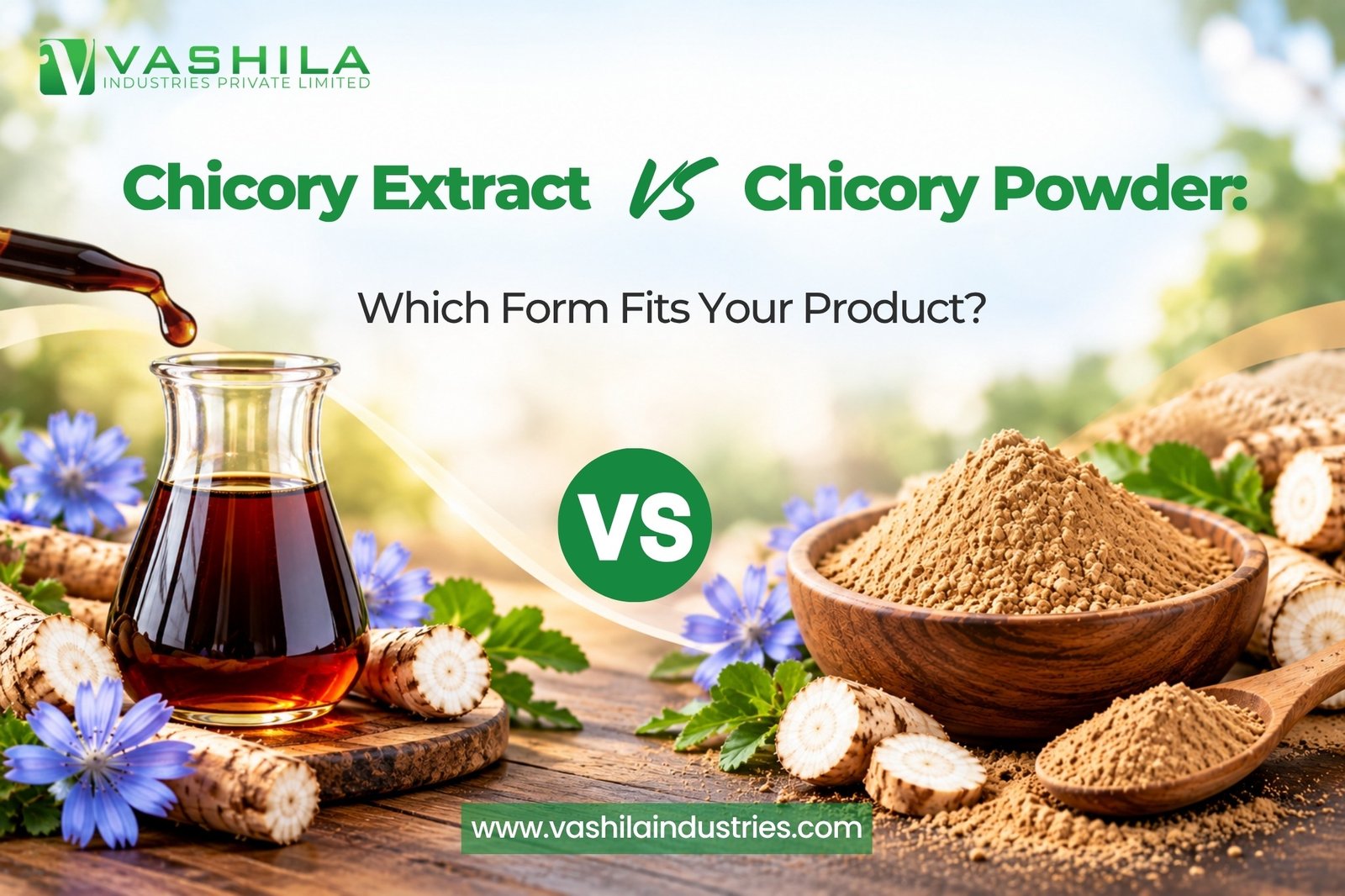
🔥 Quick AnswerChicory root is processed by harvesting, washing, slicing, drying, roasting, and grinding into different formats such as powder, cubes, or liquid extract for food and beverage applications.
Chicory is widely used in coffee blends, functional foods, and beverage applications. While the end products such as powder, cubes, or liquid extracts are well known, the transformation of raw chicory roots into these formats is a carefully controlled industrial process.
The quality of the final product depends not only on the raw material but also on how efficiently and consistently the roots are processed. From harvesting in the field to roasting and grinding, every step plays a crucial role.
This guide explains how chicory root is processed in real production environments, focusing on practical steps followed in quality-driven operations.
Step 1: Harvesting the Chicory Roots
The process begins in the field, where chicory roots are harvested at the right stage of maturity. Typically, harvesting takes place 120–150 days after sowing, when the roots are fully developed.
In controlled operations, roots are harvested manually to prevent damage and maintain quality. Careful handling at this stage ensures better processing results later.
To understand this stage in detail, refer to the complete guide on chicory root harvesting.
Step 2: Cleaning and Mechanical Washing
Once harvested, the roots are transported to the processing facility. At this stage, the roots carry soil and impurities that must be removed before further processing.
Mechanical washing systems are used to clean the roots thoroughly. This step ensures that:
- dirt and contaminants are removed
- the roots are safe for processing
- product quality remains consistent
Clean raw material is essential for maintaining industrial standards.
Step 3: Cutting and Preparation
After washing, chicory roots are cut into smaller pieces or slices. This step improves drying efficiency and ensures uniform processing.
Uniform cutting is important because uneven pieces can lead to inconsistent drying and roasting results.
Step 4: Drying the Chicory Roots
Drying is one of the most critical stages in chicory processing. The sliced roots are dried under controlled conditions to remove moisture.
This step helps:
- prevent microbial growth
- increase shelf life
- prepare roots for roasting
Controlled drying methods are used to maintain the natural properties of chicory.
Step 5: Roasting for Flavor Development
Once dried, the chicory roots are roasted to develop their characteristic flavor, color, and aroma.
Roasting transforms the raw material into a product suitable for:
- coffee blending
- beverage applications
- flavoring
The roasting process must be carefully controlled to achieve consistent results.
You can explore this stage further in the process behind roasted chicory production.
Step 6: Grinding and Processing into Formats
After roasting, chicory is processed into different forms based on application requirements.
Common formats include:
- powder
- granules
- cubes
- liquid extract
Each format is designed for specific industrial uses.
In industrial applications, chicory is available in formats such as chicory powder, chicory grain, chicory cube, and liquid chicory, providing flexibility for manufacturers.
Step 7: Packaging and Storage
The final step is packaging. Chicory products are packed using moisture-controlled and export-grade packaging systems.
Proper packaging ensures:
- longer shelf life
- protection from moisture
- safe transportation
Why Chicory Processing Matters
The processing method directly affects:
- flavor quality
- consistency
- shelf life
- industrial usability
Even high-quality roots can produce poor results if processing is not properly controlled.
Role in Industrial Applications
Processed chicory is widely used in:
- coffee manufacturing
- FMCG products
- functional foods
- global export markets
Its versatility and processing flexibility make it a valuable ingredient in modern food systems.
To understand its broader role, you can explore the complete chicory guide.

Chicory root processing is a structured journey from farm to finished product. Each stage — from harvesting to packaging — plays a vital role in ensuring quality and consistency.
By maintaining control at every step, manufacturers can produce high-quality chicory products suitable for global food and beverage applications. Contact us or request a Chicory Sample today.
FAQ
How is chicory root processed?
Chicory root is processed through harvesting, washing, cutting, drying, roasting, and grinding into different forms such as powder, cubes, or liquid extract.
What happens after chicory roots are harvested?
After harvesting, chicory roots are cleaned using mechanical washing systems, then cut, dried, roasted, and processed into final products.
Why is drying important in chicory processing?
Drying removes moisture, prevents spoilage, and prepares the roots for roasting and long-term storage.
What are the final products of chicory processing?
Chicory is processed into powder, granules, cubes, and liquid extract for various food and beverage applications.
How does processing affect chicory quality?
Proper processing ensures better flavor, consistency, and shelf life, while poor processing can reduce product quality.