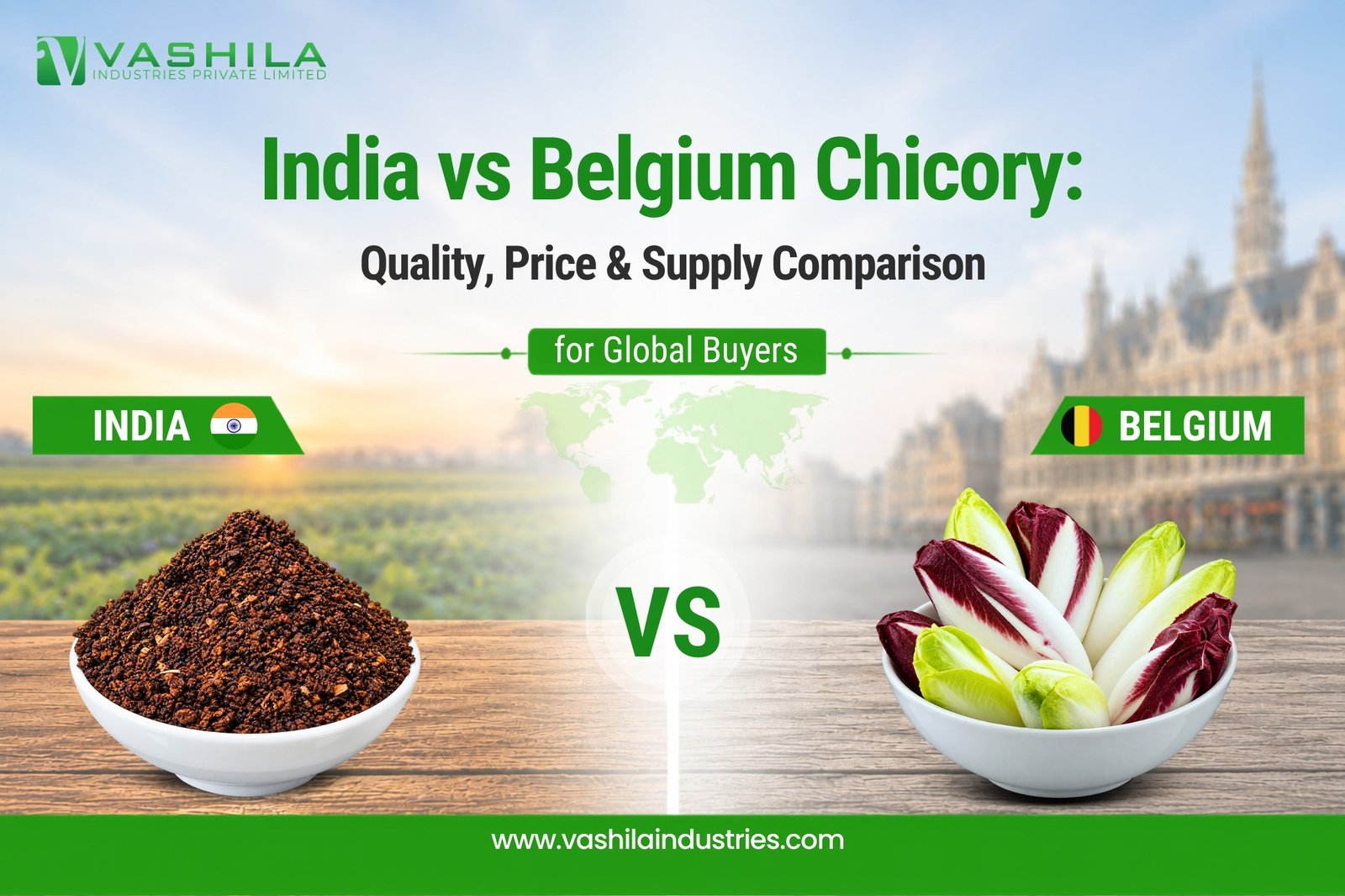
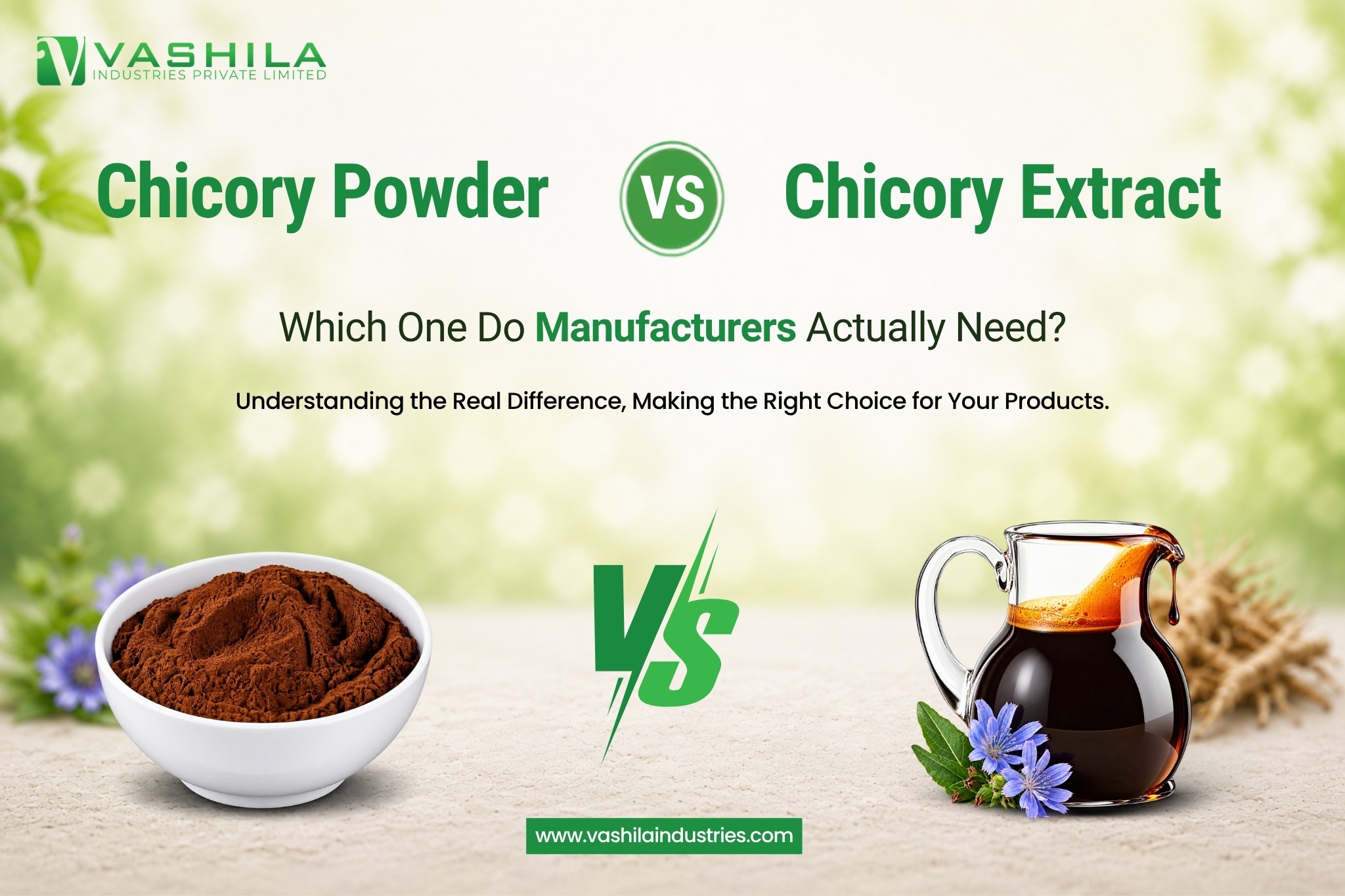
In global food and beverage supply chains, chicory is evaluated not just on price or origin, but on measurable quality parameters. For international buyers, coffee brands, and ingredient procurement teams, export-grade chicory must meet strict standards to ensure consistency, safety, and performance across applications.
This article outlines the key quality parameters that define export-ready chicory and what buyers typically assess before approving long-term supply.
Why Quality Parameters Matter in Chicory Sourcing
Chicory is used across coffee blends, beverages, and food formulations where batch consistency is critical. Variations in moisture, granulation, or roasting can directly affect flavor, solubility, and shelf stability.
Export-grade chicory is defined by:
- Predictable performance in formulation
- Compliance with international food standards
- Stability during storage and transportation
For buyers, quality parameters reduce sourcing risk and support long-term procurement planning.
Moisture Content and Shelf Stability
Moisture control is one of the most important parameters in chicory evaluation. Excess moisture can lead to:
- Reduced shelf life
- Microbial growth risk
- Clumping during storage
Export-ready chicory is processed under controlled dehydration systems to achieve stable moisture levels suitable for long-distance shipping and extended storage.
Moisture consistency also supports uniform roasting and grinding performance.
Particle Size and Granulation Consistency
Granulation directly affects how chicory behaves in brewing, blending, and processing. Buyers assess:
- Uniform particle size
- Minimal fines or oversized fragments
- Repeatability across batches
Different applications require different formats, which is why chicory is supplied in multiple forms such as:
- Chicory Powder
- Chicory Grain
- Chicory Cube
Each format must meet defined granulation tolerances to ensure predictable results.
Roasting Consistency and Sensory Profile
Roasting defines the flavour, aroma, and colour of chicory. Export-grade chicory is evaluated on:
- Roast uniformity
- Color stability
- Absence of burnt or underdeveloped notes
Consistent roasting ensures that chicory performs reliably in coffee blends and beverage formulations without altering the intended taste profile.
Color, Aroma, and Visual Standards
Visual and sensory inspection remains an important quality checkpoint. Buyers often assess:
- Color uniformity across batches
- Clean, roasted aroma without off-notes
- Absence of foreign matter
These parameters reflect both processing discipline and quality control systems.
Solubility and Functional Performance
For powdered and liquid formats, solubility is critical. Export-grade chicory must:
- Disperse evenly in application
- Perform consistently across formulations
- Maintain stability during processing
This is especially important for liquid chicory and instant beverage applications where performance issues are immediately noticeable.
Packaging Integrity and Shelf-Life Protection
Packaging plays a major role in preserving chicory quality during export. Buyers expect:
- Food-grade packaging materials
- Moisture-barrier protection
- Clear labeling and batch identification
Proper packaging ensures that chicory reaches international markets in the same condition as when it left the processing facility.
Traceability and Batch Control
Export buyers increasingly demand traceability. Key expectations include:
- Batch-wise identification
- Consistent documentation
- Clear linkage between raw material and finished product
Traceability supports quality assurance, regulatory compliance, and recall preparedness.
Product Formats Evaluated for Export
Quality parameters apply across all chicory formats supplied to global markets, including:
- Dried Chicory Roots – Base raw material for further processing
- Chicory Powder – Used in instant beverages and blends
- Chicory Grain – Preferred for brewing and bulk blending
- Chicory Cube – Used for uniform roasting and grinding
- Liquid Chicory – Applied in beverage formulations requiring high solubility
Understanding format-specific quality requirements helps buyers select the right chicory variant for their application.
How Quality Parameters Support Long-Term Supply Relationships
For international buyers, export-grade chicory is not a one-time purchase decision. Consistent quality parameters support:
- Stable formulations
- Predictable procurement cycles
- Reduced rejection or rework risk
- Long-term supplier confidence
Suppliers that maintain defined quality benchmarks become preferred partners rather than transactional vendors.
Final Thoughts
Export-grade chicory is defined by discipline, consistency, and control at every stage—from dehydration and roasting to granulation and packaging. For global buyers, understanding these quality parameters enables informed sourcing decisions and long-term supply confidence.
To explore how different chicory formats fit into processing, applications, and global sourcing, refer to the complete Chicory Guide.
Frequently Asked Questions on Export-Grade Chicory
What makes chicory suitable for export markets?
Export-grade chicory is defined by controlled moisture levels, consistent granulation, stable roasting profiles, proper packaging, and batch traceability. These factors ensure product stability during storage and international transportation.
Why is moisture control important in chicory?
Moisture directly affects shelf life, microbial stability, and processing performance. Export-ready chicory is dehydrated under controlled conditions to maintain consistent moisture suitable for long-distance shipping.
How does particle size impact chicory applications?
Granulation determines how chicory behaves during brewing, blending, and formulation. Uniform particle size ensures predictable performance across coffee, beverage, and food applications.
Does roasting consistency affect chicory quality?
Yes. Uniform roasting ensures consistent color, aroma, and bitterness. Inconsistent roasting can lead to off-notes and formulation instability, which export buyers seek to avoid.
What role does packaging play in export-grade chicory?
Food-grade, moisture-resistant packaging protects chicory from contamination and quality loss during transit. Proper labeling and batch identification are also essential for export compliance.
Is traceability important when sourcing chicory internationally?
Yes. Batch traceability allows buyers to track product origin, processing history, and quality parameters, supporting regulatory compliance and long-term supplier confidence.
Do quality parameters differ across chicory formats?
While core parameters remain the same, specific requirements vary by format. Powder, grain, cube, and liquid chicory each have distinct expectations related to solubility, granulation, and application performance.